Malachite Meditation and Crystal Grids: A Personal Healing Journey
Share
Finding My Way to Malachite
I remember the day I first held a piece of raw malachite. Its deep green bands seemed to swirl with secrets, and I felt an immediate pull—not because I expected it to 'fix' me, but because its earthy, grounding presence felt like a quiet anchor in a chaotic time. I was navigating a difficult breakup, and my mind was a storm of 'what ifs' and regrets. A friend, who practices meditation, suggested I try working with malachite as a focal point for self-reflection. I was skeptical but open. What followed was a deeply personal journey of using malachite in meditation and crystal grids—not as a cure, but as a companion for introspection and emotional processing. This article shares that journey and offers practical, grounded ways you might explore malachite for your own reflective practices.
What Malachite Actually Is: A Gemological Foundation
Before diving into the metaphysical, it helps to know the stone itself. Malachite is a copper carbonate hydroxide mineral with the chemical formula Cu₂CO₃(OH)₂. It typically forms in the oxidation zones of copper deposits, often alongside azurite. Its signature is its striking green color, ranging from bright emerald to deep forest, and its characteristic banded or botryoidal (bunch-of-grapes) patterns. These bands are actually concentric layers that form as mineral-rich solutions precipitate over time.
On the Mohs hardness scale, malachite ranks only 3.5 to 4, making it quite soft and easily scratched. It is also sensitive to acids, heat, and even prolonged exposure to water, which can dull its polish. This fragility has practical implications for how you wear and care for it, which I'll cover later.
In the gem trade, malachite is almost always opaque and is typically fashioned into cabochons, beads, carvings, or ornamental objects. If you see 'malachite' that is translucent, it is likely something else. Also, be aware that some malachite on the market is actually 'reconstructed'—made from crushed malachite bound with resin—or dyed to enhance color. Always ask about treatment and authenticity.
The Spiritual and Symbolic Legacy of Malachite
Malachite has a rich history. In ancient Egypt, it was ground into eye paint and used in amulets. The Greeks and Romans carved it into jewelry and decorative objects. In Russian folklore, it was considered a protective stone for travelers. However, the 'healing properties' attributed to malachite in modern metaphysical circles are a blend of these historical associations, later 19th-century lapidary traditions, and contemporary crystal-healing systems.
Today, many practitioners associate malachite with:
- The heart chakra: In the modern chakra system, malachite is often placed at the heart to encourage emotional balance and compassion.
- Transformation: Its layered bands are seen as symbolic of change, growth, and the peeling away of old patterns.
- Protection: Historically and in modern lore, it is considered a protective stone, especially during travel or spiritual work.
- Intuition: Some believe it enhances intuition and psychic awareness.
It's important to note: these are beliefs, not scientific facts. There is no robust evidence that malachite directly alters your physiology or energy field. What is true is that the act of focusing on a stone, setting intentions, and engaging in reflective practice can influence your mindset, emotions, and behaviors. That's a psychological phenomenon, not a magical one, but that doesn't make it any less real or valuable.
My Personal Practice: Malachite in Meditation
When I began meditating with malachite, I wasn't trying to escape my feelings. I wanted to sit with them, understand them, and eventually let them go. Here is the simple practice that worked for me:
Setting the Scene
I chose a quiet corner where I wouldn't be disturbed. I placed a piece of polished malachite in my palm or on a small cloth in front of me. I made sure my posture was comfortable but alert—sitting on a cushion or chair with a straight spine.
The Meditation
I closed my eyes and took several deep breaths, letting my shoulders drop. Then, I brought my attention to the malachite. I imagined its green bands as a visual metaphor for my own emotional layers. I asked myself: Which layer am I ready to examine today? I allowed whatever came up—sadness, anger, confusion—to be present. I didn't judge it. I just noticed where I felt it in my body. Often, it was a tightness in my chest or a knot in my stomach.
I would then visualize the malachite's green light (a symbolic act) gently surrounding that area, not to 'fix' it, but to hold it with care. I repeated a simple phrase to myself: I am here, and I am willing to feel this. After 10 to 15 minutes, I would open my eyes, take a sip of water, and jot down any insights in a journal.
Why It Helped
This practice didn't erase my pain. It gave me a ritual for turning toward it. The malachite served as a tangible anchor, a reminder to stay present. The act of focusing on its intricate patterns was almost like a form of mindfulness, drawing me away from rumination and into the present moment. This is consistent with research on mindfulness: intentionally paying attention to the present moment can reduce stress and improve emotional regulation. The stone didn't 'heal' me; the practice did. But the stone was a lovely and meaningful companion.
Building a Malachite Crystal Grid for Personal Healing
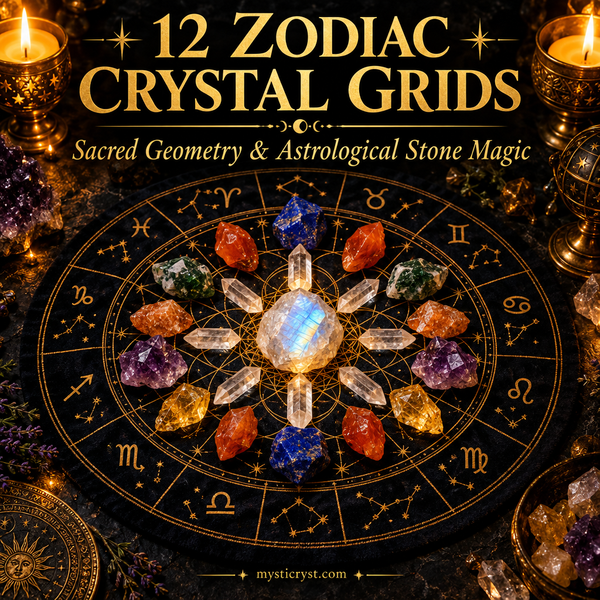
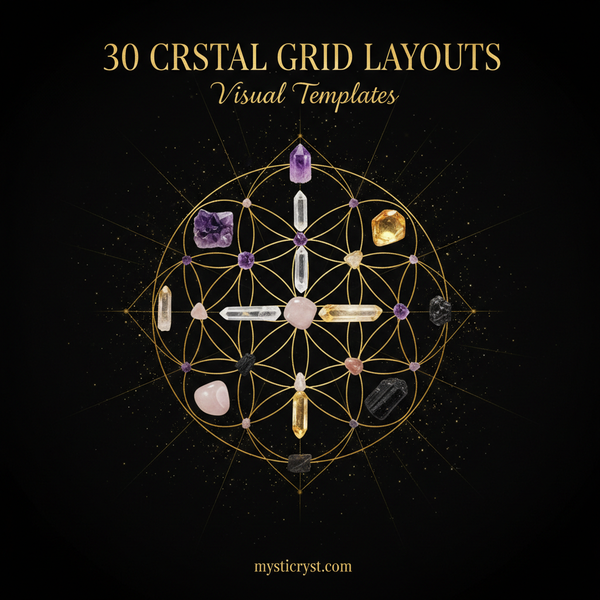
Crystal grids are a common way to amplify intention in metaphysical practice. They involve arranging stones in a geometric pattern, often with a central stone, to focus energy on a specific goal. Again, this is a symbolic practice, not a scientifically proven mechanism. But as a visual and spatial ritual, it can be incredibly powerful for making your intentions concrete.
My 'Heart Wound' Grid
After a few weeks of individual meditation, I wanted to deepen my practice. I decided to create a crystal grid specifically for self-compassion and emotional release. I chose malachite as the center stone because of its association with the heart and transformation. Around it, I placed:
- Rose quartz: To symbolize unconditional love and self-acceptance.
- Amethyst: For calm and clarity, to quiet the inner critic.
- Clear quartz: To serve as a general amplifier (though I'm not sure it did anything, the intention was there).
The Grid Layout
I arranged these stones in a simple circle, with the malachite in the center. I placed a small piece of paper under the malachite with a written intention: I release the guilt that no longer serves me. I then spent five minutes each morning and evening sitting by the grid, breathing, and visualizing that intention. Sometimes I would simply look at the arrangement, and it reminded me of my goal. Other times, I would lightly touch the malachite as I repeated my intention.
Does It Work?
Did the grid 'work'? In terms of changing my external circumstances, no. But it worked beautifully as a daily reminder. It transformed an abstract intention into a tangible ritual. Every time I saw the stones, I was prompted to think about my journey and to choose a compassionate response to my own thoughts. That is a real, observable effect on my behavior and mood. The grid was a tool for self-reflection, not a magic switch.
Practical Tips for Choosing and Caring for Malachite
If you're inspired to work with malachite, here are some practical considerations:
Selecting Malachite
- Look for authentic material: Ask the seller if it is natural, reconstructed, or dyed. Natural malachite shows distinct banding; reconstructed pieces often have a more uniform, grainy pattern.
- Choose raw or polished: Raw malachite is wonderful for meditation because it offers a tactile, earthy texture. Polished pieces are great for grids or jewelry.
- Consider the shape: Tumbled stones are comfortable for holding, while points or towers are often used for directing energy in grids. Let your intuition guide you, but also choose what is practical for your use.
Caring for Your Stone
- Avoid water: Do not soak malachite in water, and avoid wearing it while swimming, showering, or washing hands. Prolonged exposure can damage the surface.
- Keep away from chemicals: Perfumes, lotions, and household cleaners can dull the polish. Apply these before putting on malachite jewelry.
- Store safely: Because it is soft, store malachite separately from harder stones to prevent scratches.
Cleansing Practices
Many crystal users like to 'cleanse' their stones energetically. Since malachite is sensitive to water and sunlight (which can fade its color), I recommend dry methods:
- Smoke cleansing: Pass the stone through the smoke of sage or palo santo. (Always use caution with fire and smoke.)
- Sound cleansing: Use a singing bowl or tuning fork to vibrate the stone.
- Moonlight: Place it outside under the moonlight overnight (not direct sunlight) if weather permits.
These practices are symbolic and optional. If you don't believe in energetic cleansing, simply wiping the stone with a dry cloth to remove dust is enough.
A Reflective Journaling Exercise
If you're new to malachite, try this simple exercise that combines the stone with journaling:
- Choose a calm moment: Set aside 15 minutes where you can be uninterrupted.
- Hold your malachite: Sit with it in your hands. Close your eyes and take three deep breaths.
- Ask yourself: What is one emotional pattern I keep repeating that I would like to understand better?
- Write freely: For ten minutes, write whatever comes to mind. Don't censor yourself. The stone is there as a visual anchor.
- Read back: After writing, read what you've written. Look for themes or insights. Then, write one line about what you're grateful for in that pattern—perhaps it protected you in some way.
This exercise doesn't promise instant clarity, but it gives your mind the space to process emotions in a structured way.
Misconceptions and Safety Cautions
It's important to be aware of what malachite cannot do. It cannot cure disease, prevent illness, or replace medical treatment. If you are experiencing physical or mental health issues, please consult a qualified healthcare professional. Malachite is a spiritual tool, not a medical device.
Also, be careful if you are tempted to make 'malachite elixirs' by soaking the stone in water. Malachite contains copper, which can be toxic in high concentrations. It is not safe to ingest water that has been in contact with malachite. Always avoid drinking any liquid that has been in contact with this stone.
Finally, remember that your experience with malachite is personal. Some people may feel a strong connection; others may feel nothing. That's okay. The value of the stone lies in what you bring to it: your intention, your focus, and your willingness to reflect.
Conclusion: A Stone for the Journey, Not the Destination
My journey with malachite taught me that healing is not about finding a magic cure—it's about showing up for yourself every day. Malachite became a symbol of my commitment to that process. In meditation, it helped me stay present. In crystal grids, it reminded me of my intentions. And in daily life, it served as a small, green touchstone of self-compassion.
If you are drawn to malachite, I encourage you to explore it with an open heart and a clear mind. Use it as a tool for reflection, not as a substitute for action. Combine your spiritual practices with practical steps, such as therapy, healthy relationships, and self-care. In that way, the stone becomes a meaningful companion—not a miracle worker, but a faithful one.