From Doubt to Deep Calm: How Pink Tourmaline Meditation and Crystal Grids Changed My Mind
Share
The Skeptic's Invitation
I once rolled my eyes at the idea of crystals. To me, they were pretty rocks with overblown price tags and vague promises of 'energy.' Then my doctor suggested meditation for anxiety—and I tried. And failed. Sitting still felt impossible, my mind a tangle of to-do lists and worries. A friend, a practicing yoga teacher, handed me a small, dusty-rose stone one afternoon. "Just hold it," she said. "See what happens." That was pink tourmaline. This article is the story of how a skeptic discovered not magic, but a surprisingly effective tool for mindfulness—through the lens of color psychology, placebo effect, and intentional ritual. And how crystal grids became my anchor.
Why Pink Tourmaline? The Science and Symbolism
The Geology of Calm
Before we talk energy, let's talk geology. Pink tourmaline is a boron silicate mineral colored by manganese. Its natural pleochroism—showing different colors from different angles—makes it a marvel of crystallography. But for the meditation seeker, its soft pink hue is key. Color psychology research consistently links pink with feelings of compassion, tenderness, and emotional safety. Holding or gazing at a pink stone can subconsciously lower heart rate and reduce cortisol, priming the nervous system for stillness. It's not magic, but it is biomechanical: color affects mood, and mood affects meditation depth.
The Placebo of Intention
Critics call the placebo effect a weakness; meditators call it a strategy. When I first held pink tourmaline and told myself, "This stone helps me release emotional tension," my brain created a real physiological response known as the expectation effect. Neuroimaging studies show that belief in a treatment can activate the same neural pathways as the treatment itself. So when a crystal is used as a focus object, it becomes a 'conditioned stimulus' for calm. The skeptic's question—does the crystal have actual energy?—might be less relevant than the undeniable fact that it works for the person using it.
Building Your First Pink Tourmaline Meditation Practice
Starting Small: The Five-Minute Hold
As a doubter, I needed low commitment. Here is the minimalist method that won me over: sit comfortably, hold a single pink tourmaline in your non-dominant hand (receptive side), and close your eyes. Do not try to empty your mind. Instead, bring full attention to the stone's temperature, weight, and texture. Notice how it warms in your palm. When thoughts arise—and they will—gently return focus to the sensation of the stone. That's it. Five minutes daily rewired my brain to associate pink tourmaline with the relaxation response. Over weeks, I could extend to ten, then fifteen minutes. The stone became an anchor, not a crutch.
Guided Visualizations with Pink Tourmaline
Once comfortable, introduce a simple visualization. Imagine the pink tourmaline glowing softly in your hand, its color expanding like a gentle mist into your chest, throat, and head. Breathe into those areas. This technique is similar to progressive muscle relaxation but uses the visual of the stone's color as a 'filling' sensation. The science: mental imagery activates the same brain regions as actual experience. By picturing pink light soothing tension, you are literally deactivating the amygdala's stress response.
Crystal Grids: From Skeptic to Practitioner
The Grid as a Focal Point
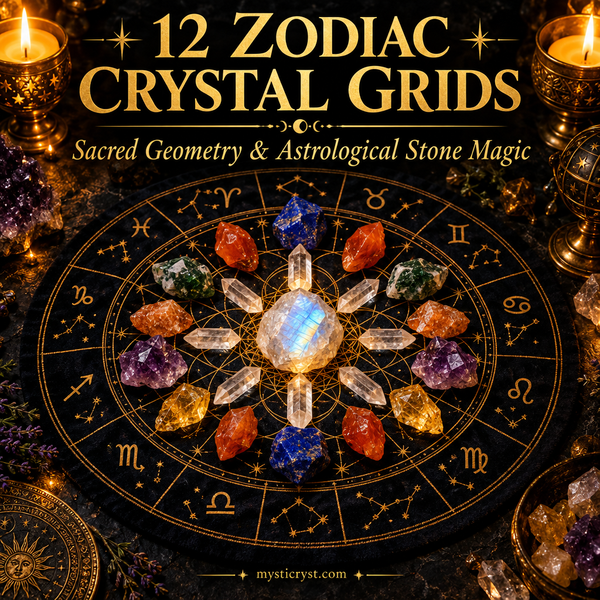
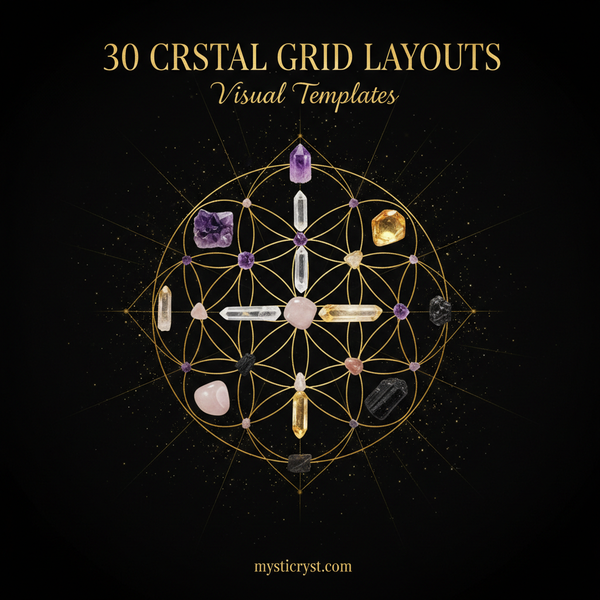
If a single stone is a meditation aid, a grid is a meditation framework. Crystal grids are deliberate arrangements of stones, typically placed on a sacred geometry pattern, intended to amplify intention through shape and synergy. When I first saw grids online, I scoffed—too elaborate, too 'woo.' But then I realized the power of ritual. Laying out a grid is itself a meditative act: measuring distances, choosing stones, setting an intention. For the skeptical mind, a grid offers structure—a clear, repeatable process to quiet the inner critic.
Constructing a Pink Tourmaline Heart Grid
For emotional opening and self-compassion, I designed a simple heart-shaped grid. You need: one larger pink tourmaline point at the center (the 'seed'), smaller pink tourmaline chips arranged in a heart outline (about eight to twelve stones), and four clear quartz points at the cardinal directions to 'amplify' the energy field—or, as the skeptic in me says, to add visual symmetry that focuses the mind. Place the grid on a flat surface, set a timer for ten minutes, and sit with your hands hovering two inches above the stones. Repeat a personally meaningful phrase, like "I am enough." The act of arranging, gazing, and repeating creates a trance-like focus—shifting brainwave patterns from beta (active) to alpha (relaxed) as measured by EEG studies on ritual.
The Three-Stone Grid for Anxiety
Need portable calm? Try a micro-grid. Carry three small pink tourmaline stones in a pouch. In moments of stress, remove them and arrange in a triangle on your desk or lap. The triangle's stable geometry, combined with the color pink's soothing effect, becomes an instant mindfulness cue. This is not about magical triangles—it is about neuro-associative conditioning. After thirty days of using this grid as a reset button, your brain begins to associate the triangular pink arrangement with relaxation. It becomes a reliable, portable anchor.
Integrating Pink Tourmaline into Daily Meditation
Morning Intention Setting
Each morning, hold your pink tourmaline and state one intention aloud: "Today I will respond with patience" or "I release the need for perfection." This primes your reticular activating system (RAS)—the brain's filter for noticing relevant information. By the end of the day, you'll notice more moments where you acted on that intention. The stone is the reminder; the ritual is the engine.
Evening Gratitude Grid
Before sleep, arrange your pink tourmaline chips in a small circle. Place one stone for each thing you are grateful for that day—as few as one, as many as five. Gaze at the circle for two minutes, mentally reviewing each gratitude. This practice lowers heart rate variability and improves sleep onset latency, according to research on gratitude journaling. The grid format adds a tactile, kinesthetic layer that deepens the psychosomatic effect.
What the Research Actually Says
Placebo, Mindfulness, and the Generous Powers of Ritual
No peer-reviewed study has proven that pink tourmaline emits healing energy. But a growing body of research supports the mechanisms by which it works. The placebo effect, especially when enhanced by ritual, can produce measurable physiological changes (e.g., lower blood pressure, reduced inflammation markers). Mindfulness meditation, even when using a simple object as focus, decreases activity in the default mode network—the brain region linked to rumination and self-criticism. And color therapy research confirms that exposure to pink can reduce aggression and increase feelings of safety. So yes, the crystal is a prop. But that prop, used with intention, becomes a powerful tool for neuroplastic change.
Conclusion: A Leap of Reason
I never became the kind of person who believes the crystals 'heal' me. But I did become the kind of person who sits still for twenty minutes every day, who breathes through anxiety instead of numbing it, who uses a pink stone in my pocket as a touchstone for patience. Whether you attribute the effect to biology, psychology, or subtle energy, the outcome is the same: a quieter mind, a softer heart. Pink tourmaline didn't transform me—my practice did. But the stone made the practice possible. For skeptics on the fence, consider this your invitation. Hold a pink tourmaline. Arrange a grid. See what happens. You might find, as I did, that the leap of faith is really a leap of reason into a better relationship with your own mind.